Tuesday, January 31, 2012

Jim Bridger and the Oregon Trail

The terms mountain man, army officer, trail blazer, trader, trapper, explorer, guide, merchant and interpreter all describe one man; James Felix "Jim" Bridger.
From the Noah H. Rose collection.

Fort Bridger, the Bridger Mountains, Bridger National Forest and Bridger Pass are all named after Jim Bridger.

He stumbled upon Utah's Great Salt Lake while mapping a trail between Bear River and Cache Valley.  He mistakenly thought it was the Pacific Ocean; and was perhaps the first white man ever to see this huge body of water.

He went on to establish Fort Bridger along the Green River in Wyoming.  Fort Bridger was an important stop for Oregon Trail travelers.  

In 1850, Bridger was hired for a surveying expedition, and while evading the Ogalala Indians (a sub-tribe of the Lakota people) he ended up shortening the Oregon Trail by 61 miles.  This pass he found is now known at the Bridger Pass.  

This route on the Continental Divide became the course for the Union Pacific Railroad and Interstate-80.

Sunday, January 22, 2012

Happy Birthday Josephine!

Happy Birthday Josephine County!  Today, January 22, 2012 she is a spry 156 years old.

According to Wikipedia, "Josephine County is a county located in the U.S. state of Oregon. According to Oregon Geographic Names, the county is probably named after a stream in the area called Josephine Creek, which in turn is probably named after Virginia Josephine Rollins Ort. In 2010, its population was 82,713. Grants Pass is the county seat."

We all know Josephine County is much more than this.  From her beginnings at Sailors' Diggings to now, she has gone through many changes, yet maintains her independent, pioneering spirit.

At the Josephine County Historical Society we strive to share the rich heritage of our past.  Our mission is all about collecting, preserving, exhibiting, promoting and interpreting local Josephine County history. 


In our Research Library we have a large collection of photos, newspaper clippings, books, maps and family stories.  The public is welcome to view our collections and conduct research Tuesday through Friday from 10:00am to 4:00pm.    This service is free for members and $5.00 per visit for non-members.

We also have a Bookshop located in our Research Library, where you'll find many Josephine County related subjects.  Whether you're interested in reading about the early settlers, specific towns and areas, Indian wars, or the geography of Josephine County, we've got a book for you.  Many of these books contain photographs you will not find anywhere else.  Our books may also be purchased online, just click here.


We have many events through out the year, and most are free to the public.  Our "Living History Players" provide entertainment at our events as well as presenting outreach programs to schools, civic groups and others.   Click here to check out our event schedule.


The Josephine County Historical Society also operates the Schmidt House, a historical house museum.  Tours are available Tuesday through Friday from 10:00am to 4:00pm.  Anna and Flora Schmidt gifted their house to the Society in 1978.  It is the only still existing historical home in Josephine County that was continually occupied by the same family since being built in 1901.

If you have any family history, stories or photos you'd like to share with us, we'd love to have them.  Please feel free to stop by the Research Library, give us a call at 541 479-7827, or use our website jocohistorical.org.

If you're not yet a member, are you interested in joining us?  We'd like to encourage you to join the fun and become a member!  You can stop by the Research Library Tuesday through Friday from 10:00am to 4:00pm at 508 SW 5th Street in Grants Pass or sign up online by clicking here


Wednesday, January 18, 2012

Interviews of Illinois Valley Old-timers

 
Interviews of Illinois Valley Old-timers is a small gem “in the rough.”  This compilation comes from some recently discovered pages found in the archives of the Josephine County Historical Society’s Research Library.


These pages are biographies of elderly Illinois Valley residents taken by students attending Kerby Union High School, circa 1944. 
 

If you’ve spent much time in Josephine County, Oregon you will probably recognize quite a few of the names of the “Old-timers” being interviewed as well as the students conducting the interviews.


These Interviews of Illinois Valley Old-timers show how the same events are remembered differently by those who were there.  For example, some of the Old-timers remembered the Great Depression as barely touching their lives, while others saw it as one of the “worst hard times.”


These mini biographies show us a glimpse in the lives of some of our earlier residents of the Illinois Valley, and it is well worth the short time it takes to read them.


What a wonderful idea the teacher of these students had.  I would give them all an A+!

Interviews of Illinois Valley Old-timers can be purchased now for just $10.00


or at the Josephine Historical Society's Bookshop located in the Research Library at 512 K Street, Grants Pass; or at their Online Bookshop.

Sunday, January 15, 2012

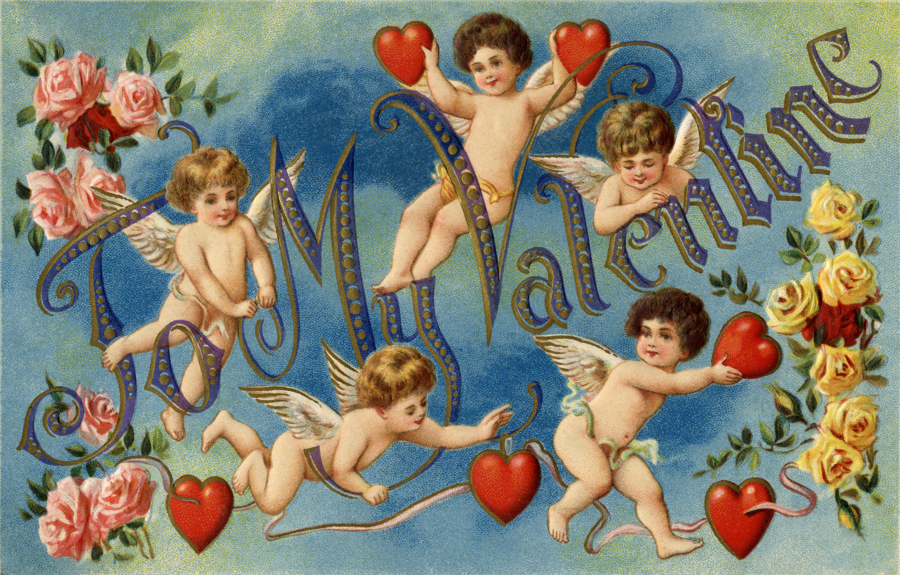
Valentine's Day at the Schmidt House - Grants Pass, OR

Valentine's Day Is "Historically" For Sweethearts.


Are you looking for an event to get you in a romantic mood for Valentine’s Day?

Photo courtesy of  Steve Henke at www.stevehenke.com
Stop by the Schmidt House and Barn and join us for red wine and chocolate.  


Visit the Schmidt House and see the collection of beautiful vintage wedding gowns.  In addition to Mrs. Herman Schmidt’s wedding dress, the gown from the first wedding held at the Oregon Caves Chateau will be displayed.  

 You will also enjoy viewing the Schmidt Ladies’ lovely collection of antique Valentines.


Costumed Docents will be on hand to talk about the bridal gowns and pour wine from 1:00 to 4:00 p.m. on Saturday, February 11.   

We are inviting members of the public to attend this free event as well.  Please tell your friends!

For more information, please call the Josephine County Historical Society at 541 479-7827.

Thursday, January 12, 2012

Massacred For Gold by R. Gregory Nokes


Massacred For Gold by R. Gregory Nokes intertwines enticing descriptions of magnificent views in the Hells Canyon area in Northeastern Oregon and Western Idaho with the tragic murders of Chinese miners and the shocking lack of concern shown by the local population.

Mr. Nokes painstaking research pieces together the story of how such a large number of people could be massacred, and why the known killers were allowed to go free.

The killers were motivated by greed; after all some of them were known rustlers and thieves. What this well-written story also shows us is how lack of knowledge of other races leads to intolerance and injustice, especially when they make no attempt to assimilate into American society; and how the power struggle among the politicians leads to finger-pointing and trying to shift blame to the other party.

This attitude toward the Chinese workers started with the railroads, and continued with the gold mining throughout the West. In many places the shooting of a Chinese worker carried no penalty for the killing itself, but oftentimes there would be a small fine for discharging a firearm in the city limits.

Unlike many history books, “Massacred For Gold” tells a cohesive story and moves along at a nice pace that makes you want to learn more about how the murders of such a large number of people could have happened with hardly anyone outside the Wallowa region knowing about it. It is well worth the read.

Please call the Josephine County Historical Society at (541) 479-7827 if you would like to purchase Massacred For Gold.


Thursday, January 5, 2012

Golden Days and Pioneer Ways – by Ruth Pfefferle

 
The term “Gold Rush Days” make many people think of the gold strikes in California or Alaska, but the Illinois Valley of southern Oregon has its own unique tale of “Gold Rush Days.”

Golden Days and Pioneer Ways written by Ruth Pfefferle takes us on a wonderful journey of the life and times of those who settled in the Illinois Valley of southern Oregon.  Ruth shares the history of the different communities in the Illinois Valley; such as Browntown where as many as 6,000 miners once lived; and Waldo, the first Josephine County seat.  Waldo in addition to having the usual frontier establishments – a blacksmith shop, saloons, dance halls, a livery stable and gambling establishments also had a skating rink.  You’ll learn about how Kerby was settled; the only remaining town of the three largest original settlements in the Illinois Valley.

Golden Days and Pioneer Ways tells us stories of the few lucky miners who struck it rich, and many who never found their “pot of gold.”  In addition to the miners, you’ll also learn about the hearty pioneers who settled the Illinois Valley with their farms and businesses.  Although they weren’t famous, these were hardworking people, who were brave and generous.

Mrs. Pfefferle has arranged Golden Days and Pioneer Ways in easy to read sections from the history of the Illinois Valley, mining, pioneer life, schools, transportation, Oregon Caves and several others.

Mrs. Pfefferle dedicated her book to her beloved husband Phayo Pfefferle who was a great inspiration to her while she was writing a column for the Illinois Valley News in Cave Junction.

Golden Days and Pioneer Ways is an enjoyable history lesson for anyone interested in Josephine County’s Illinois Valley.  Mrs. Pfefferle describes history this way, “History is important because if we have no knowledge of the past, we can not appreciate the present or look forward to the future.”
This book also contains great information for genealogists whose ancestors settled in the Illinois Valley.

Golden Days and Pioneer Ways can be purchased at the Josephine Historical Society's Bookshop located in the Research Library at 512 K Street, Grants Pass; or at their Online Bookshop.

Tuesday, January 3, 2012

Mining The Illinois River Valley

The following post is provided courtesy of Gary Swanson.

Mining The Illinois River Valley - Southern Oregon

 "Suckers" from Illinois found gold in Oregon! 

The Illinois River Valley was named after a group of miners who hailed from the state of Illinois in about 1852. "Sucker" creek was also named for the same group, as Illinois was known as the "Sucker State." 

Well, the gold seekers tore through the Illinois River Valley along both sides of the Illinois River. The vast piles of "tailings" stretches for miles in this beautiful valley as evidence of the wealth in gold, silver, and platinum that came from Mining The Illinois River Valley

Just northwest of Little Falls, the Illinois River Valley widens, and this wide area made it profitable to bring in the big guns for the hydraulic operations. 

We discovered these ditches starting high up the valley sides, which were built to bring massive amounts of water down to the hydraulic Mining In The Illinois River Valley. Chinese laborers were often used for the backbreaking work of building these miles of waterways. 

Water coursing down the mountain and funneled down through ever constricting flumes and hoses creates tremendous water pressure, which was used to blast the hillsides to separate the gold and minerals from the surrounding rock. 


Whether dredged, or hydraulically mined, the huge piles of remaining rocks are referred to as "tailings." I would assume the word was derived from the workings of a dredge where the material went in the front, and ended up coming off a conveyor in the rear or "tail" after the gold had been extracted. 


The Illinois River Valley has largely "grown over" the scars left by gold mining, but there are still signs of the gold miners scattered throughout the Illinois River Valley area, as you will find all over Josephine County.